Author Archives: Gordon Rogers

EverTrain – Industry training for land managers

EverTrain is a NSW Department of Primary Industries e-learning initiative funded through the Future Farm Industries Cooperative Research Centre(FFI CRC). It is an education and extension training system that combines online training with face to face workshops to make training more accessible for land managers.

The EverTrain courses are designed to be both cost effective and convenient by reducing time away from the home and business. Rather than attending at a fixed time, you can view your training material from any internet connected computer, at a time that suits you. Online learning provides flexibility by enabling you to set your own study schedule and progress through a course at your own pace.

These courses are based on research and designed specifically for people involved in:

  • Agribusiness
  • Cropping
  • Grazing
  • Horticulture
  • Natural resource management

EverTrain offers several online courses including:

  • managing carbon on agricultural land,
  • managing climate risk in agriculture,
  • salinity concepts (NSW, SA or WA),
  • salinity management (NSW) and
  • soil biology 

Managing Carbon on Agricultural Land

his course provides participants with an opportunity to develop an understanding of the carbon cycle on a global and paddock scale. It also looks at the different types of soil carbon, where they are found in the soil, how they can be measured, what benefit they have to the soil and the role soil can play in the mitigation of climate change. It then addresses how soil can be managed to build soil carbon levels with reference to the constraints of soil type and climatic zone. More information.

Managing Climate Risk in Agriculture

This course has been designed to provide participants with the knowledge and skills required for the development of climate risk management strategies for agricultural enterprises. The course is suitable for managers of agricultural business and rural land, or anyone seeking to understand weather and climate risk management. More information.

Salinity Concepts NSW, SA or WA

This course provides participants with an opportunity to develop an understanding of the carbon cycle on a global and paddock scale. It also looks at the different types of soil carbon, where they are found in the soil, how they can be measured, what benefit they have to the soil and the role soil can play in the mitigation of climate change. It then addresses how soil can be managed to build soil carbon levels with reference to the constraints of soil type and climatic zone.. More information.

Salinity Management NSW

This course builds upon its precursor, Salinity Concepts, and provides participants with an opportunity to understand the causes of salinity outbreaks in the landscape and approaches to managing them. More information.

Soil Biology

This course has been designed to provide participants with knowledge about the functions of soil organisms and highlights the importance of soil organisms for soil health. The course presents techniques to identify and monitor soil biological health and manage soil organisms for sustainable land management. More information.


Bushfires, climate change and vegetable production

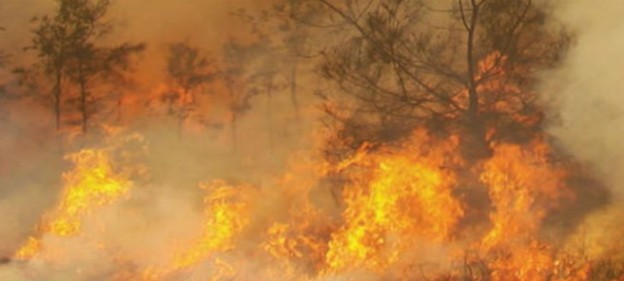
Hot, dry conditions have a major influence on bushfires. Climate change is making hot days hotter, heatwaves longer and more frequent while some parts of Australia are becoming drier. Australia is a fire prone country and has always experienced bushfires, these conditions are driving up the likelihood of very high fire danger weather, especially in the southwest and southeast. All extreme weather events are now being influenced by climate change because they are occurring in a climate system that is hotter and moister than it was 50 years ago.

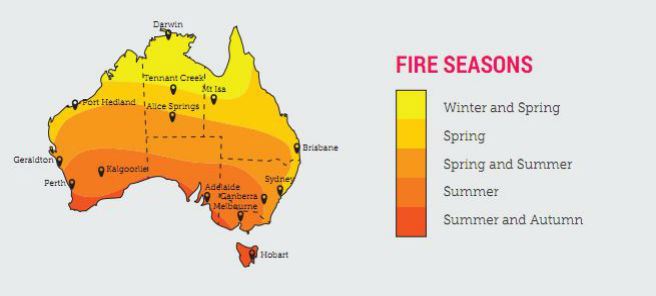
Broadly Australia has two main fire seasons:

  • a northern fire season where bushfires occur over winter during the northern dry season and,
  • a southern fire season that occurs later in the year during the lead up to summer
Bushfire seasons across Australia. (Source: Bureau of Meteorology, 2009)

Bushfire seasons across Australia. (Source: Bureau of Meteorology, 2009)

Uncontrolled bushfires can cause significant losses to crops and farming infrastructure such as fences and machinery. In the absence of physical damage, smoke from the fire can taint fruit and vegetable crops, wine grapes are particularly susceptible.

Bushfires can reduce water availability through damage to water infrastructure. Water quality and quantity in water catchments can also be affected by bushfire both in the short and long-term. Large-scale high intensity fires that remove vegetation in catchment areas expose topsoil to erosion and increased run off. This impacts water quality through increased sediment and nutrient concentrations in waterways, potentially making water supplies unfit for human consumption.

In the long-term fire can also affect water flow in forested catchments. As the forest regenerates after the fire the new active growth uses more water than the mature trees they have replaced. The best example of this effect is in the mountain ash forests of Victoria. Seven years after the 2003 fires the regrowth is still using twice the amount of water compared to mature vegetation in nearby forests. This pattern is called the “Kuczera effect” and can last for several decades (until the replacement trees mature). In such cases water yields from forested catchments may be reduced by up to 50%.

A recent study by Keating and Handmer (2013) provides a full economic assessment of the impacts of bushfires on primary industry. The study estimates that bushfire damage to the agricultural industry currently costs the Victorian economy $92 million per annum, this is also likely an underestimation.

The full Climate Council Be Prepared:Climate change and the Australian bushfire threat report can be accessed here

Managing the risks of ectreme events and disasters to advance climate change adaption

This Special Report on Managing the Risks of Extreme Events and Disasters to Advance Climate Change Adaptation (SREX) has been jointly coordinated by Working Groups I (WGI) and II (WGII) of the Intergovernmental Panel on Climate Change (IPCC). The report focuses on the relationship between climate change and extreme weather and climate events, the impacts of such events, and the strategies to manage the associated risks.

The report consists of nine chapters, covering risk management; observed and projected changes in extreme weather and climate events; exposure and vulnerability to as well as losses resulting from such events; adaptation options from the local to the international scale; the role of sustainable development in modulating risks; and insights from specific case studies.

Click here for the full report