Author Archives: Gordon Rogers

CO2 effects on crop water requirements

In most plants, increased CO2 reduces water use or transpiration. This is because the pores in the leaves – stomata – partially close, reducing water loss. The effect can be significant. For example, a free air CO2 enrichment (FACE) study on wheat showed that water-use efficiency was 19% higher under elevated CO2.

This may be particularly important if, as predicted, dry periods increase and rainfall decreases.

The practical reality, however, is that in Australia virtually all vegetable crops are irrigated, and even though the price of water for irrigation rose to $1500 per ML in Australia in 2008 during a severe drought, vegetable growers are otherwise able to supply their crop water requirement without difficulty.

Electricity for pumping water is a major source of greenhouse gas emissions for the vegetable industry. If the crop water use can be reduced, through a combination of better crop water management and measuring soil moisture levels, it may be possible to reduce the water use requirement and therefore reduce the emissions and power costs in production because irrigation pumps can be run for a shorter time.

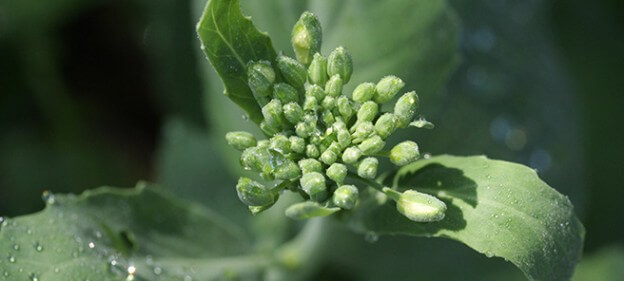
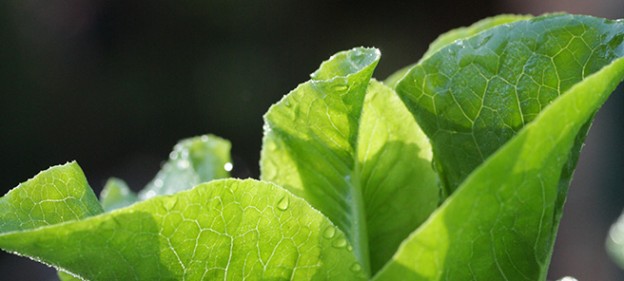
Physiological disorders such as tipburn in lettuce and brassica crops, blossom-end rot in tomato, capsicum and watermelon are sometimes associated with excessive transpiration, so the incidence of these disorders may be reduced under elevated CO2.


[1] Peet, M. M. and D. W. Wolfe (2000). Crop ecosystem responses to climatic change: vegetable crops.
CO2 effects on crop growth

The yield or growth rate of most vegetable crops is likely to increase as atmospheric CO2 levels rise. This effect is well known in the glasshouse industry where CO2 enrichment has been practiced for many years for crops such as tomatoes, cucumbers, capsicums and leafy vegetables.

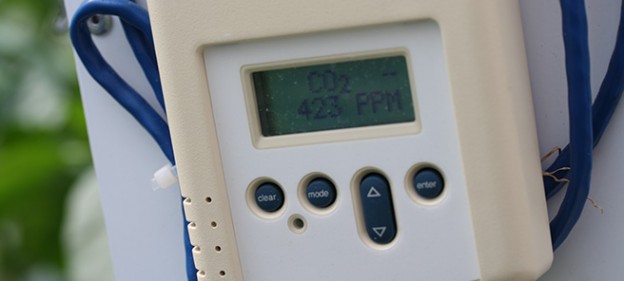
Global CO2 levels have just recently reached 400ppm, up from 320ppm in 1960 and 350ppm in 1985. Unless global abatement measures start to have a significant impact, it is expected that atmospheric CO2 levels will be about 435ppm by 2035.

High CO can result in more efficient photosynthesis and improved growth, especially if soil water is limited. The impact can be dramatic, with growth-rate increases up to 20-50% possible if atmospheric CO2 levels reach 500ppm. For example, capsicum growth was increased by 46% when grown at 450 ppm CO2 compared to 360 ppm, and more modest increases have been observed for other crops such as eggplant (24%) and tomatoes (31%).

In practice, however, yield increases tend to be less than expected. Yield is complex and affected by how the variety and its environment interact. Perennial crops, such as fruit trees and forest trees, have been shown to adjust to increased CO2, diminishing its impact over time. Some varieties may respond to high COmore than others, meaning optimum varieties may change over time.


Effects of climate change on water use

Water use by vegetable crops is mainly determined by loss into the atmosphere, rather than availability in the soil. The atmospheric demand for water is estimated by the potential evapotranspiration (PET). Four factors influence PET:

  • Temperature
  • Wind speed
  • Sunshine
  • Relative humidity

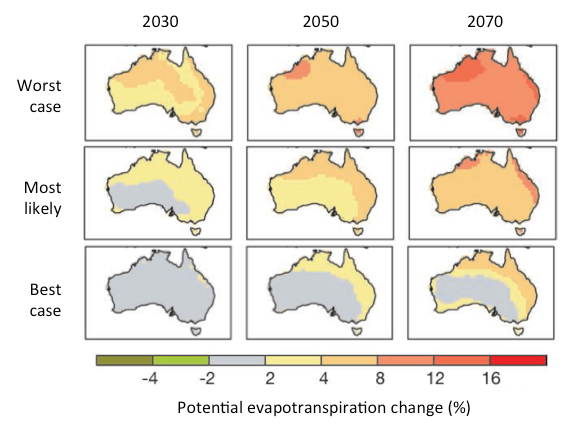
Increases in temperature can be offset by decreases in sunshine, due to cloudy conditions, or decreases in wind. Over the past few decades PET has been falling, despite rising temperature.  The interplay between temperature and other climate factors means that changes in PET are predicted to be relatively small. For 2030, the best estimate suggests only a 2-4% increase in PET in the vegetable growing regions.

PET changes