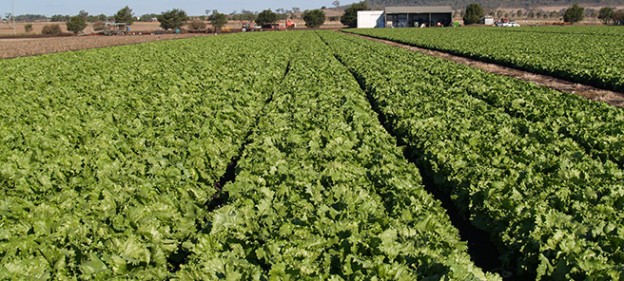
The lettuce industry in Australia is our 6th largest vegetable industry by value. It is made up of field production of Iceberg and Cos head lettuce, with a significant proportion of Iceberg lettuce grown for processing. Lettuce also makes up one of the top three baby-leaf vegetables with spinach and rocket, and there is a significant market in “fancy” type lettuces, many of which are gown using NFT hydroponic systems with some form of protected cropping.
Lettuce germination and early growth rates are largely determined by temperature. The apical meristem of young lettuce plants is near the soil surface, so plant growth is often more closely matched to soil temperature than air temperature.
Suitable air temperatures range from 12 – 21C, with 18C the optimum. The most succesful lettuce production occurs during periods when there are at least two months with maximum daytime temperatures of 17 – 28C and night time temperatures not exceeding 15C.
Studies have shown that increasing the average temperature from 16.3C to 21.1C increased early season growth and reduced crop duration. This effectively reduced total yield by 17%.
- Warm temperatures and high humidity can result in tip burn. This disorder is due to rapid growth rates and is associated with localised calcium deficiency. Just a few days of high temperatures (32C) can cause enough visual damage to result in total crop loss. Improving soil calcium availability does not alleviate the problem. Foliar calcium application can be partly effective, but is not a practical solution.
- Night temperatures remaining relatively high (15-16C) can also result in tip burn, especially when associated with high RH.
- High daytime temperatures during the day (32C) also increase the risk of bolting, lack of colour development and bitterness.
- Some research suggests that night temperatures are more important than day temperatures in terms of induction of bolting. Iceberg lettuce flowers 21 days earlier if with warm night temperatures of 21C rather than 16C.
- Lettuce seed will not normally germinate at over 25C. This issue can be overcome by using seedlings or priming seed in 1% potassium phosphate or water
- Lettuce can tolerate low temperatures, even below zero for short periods. However, low temperatures extend the growing period by up to 150 days and can increase the incidence of anthracnose, russetting and external cracking
Carbon dioxide enrichment, typically to levels of 1,000 – 1,200ppm has been used commercially to increase yields of greenhouse-grown lettuce. It has been found that dry weight can increase by up to 50% under these conditions.
One study estimated the effect on lettuce yields resulting from expected climatic changes as well as a doubling in CO2. This found that the negative effects of climate were compensated for by the high CO2 levels, with the result that fresh weight yield was reduced by only about 5%. This suggests that, so long as temperatures do not reach thresholds that result in tip burn, bolting or other major issues, yields will be similar in a high CO2 world. In some cases, shorter crop duration may even allow an extra planting in a single season!